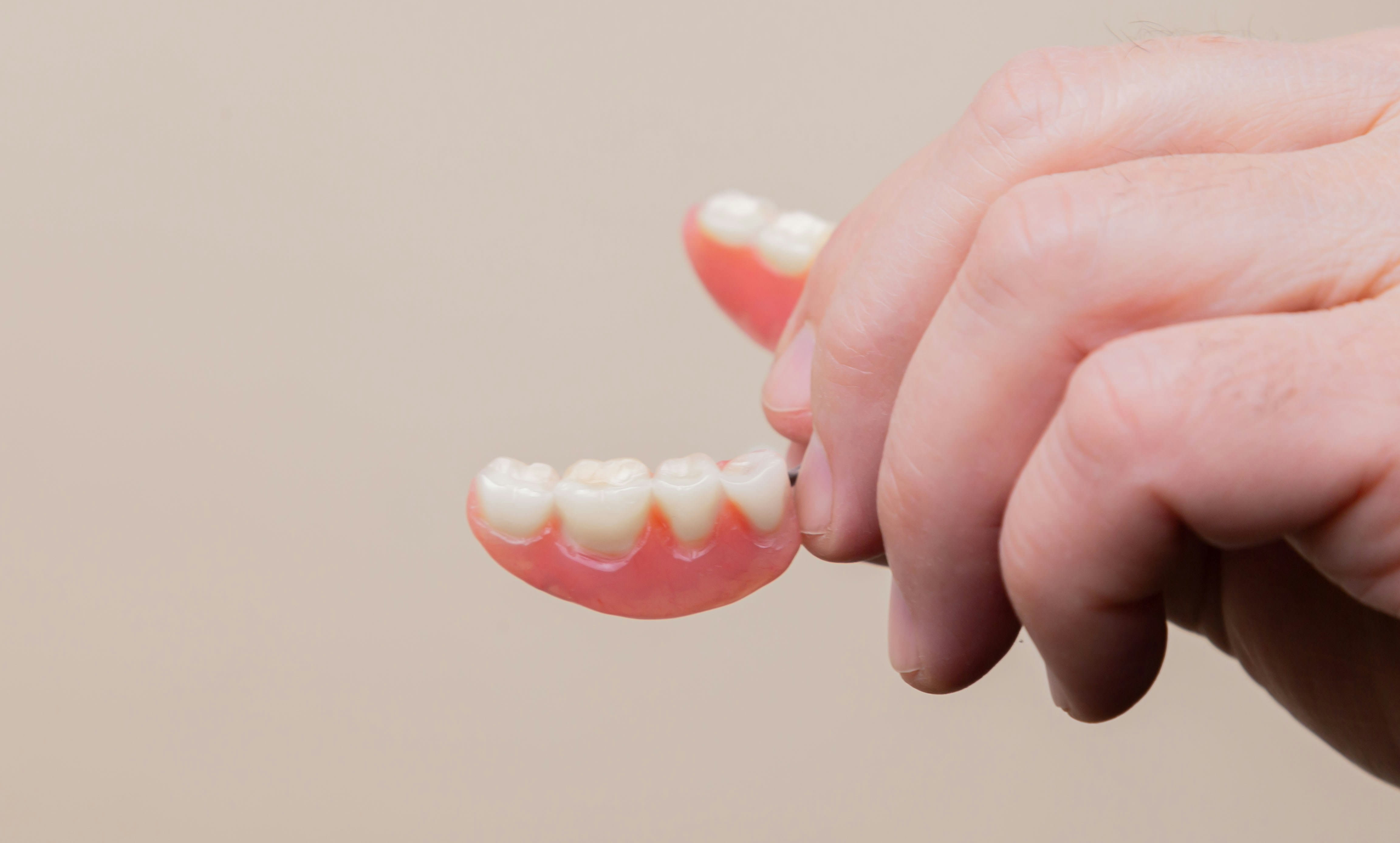
Dentures are prosthetic teeth – they replace natural teeth. In the same way that a person who loses a leg can get a plastic prosthetic leg, a person who loses their teeth can get plastic prosthetic teeth. Dentures work by putting white plastic teeth on pink plastic bases that sit on the alveolar bone – the bone that holds the teeth in a person’s upper and lower arches.
What Dentures Are Designed to Do
Dentures help someone without teeth to eat, speak, and smile. They can also help to support the facial structure of someone who has lost all their teeth.
Signs Dentures Might Be Right for You
- Majority of teeth are missing or damaged
- Poor nutrition due to difficulty chewing
- Changes in speech due to lack of tooth contact
- A sunken or over-closed appearance from tooth loss
- Loose or failing teeth that cannot be saved
Types of Dentures
- Full Dentures are for patients missing all their teeth in an arch. They are what are usually thought of when someone refers to dentures or “plates.”
- Immediate Dentures are full dentures placed the same day as extractions. They are a transitional denture used so that a patient doesn’t have to go without teeth while they heal from their extractions. Often, immediate dentures don’t look good, don’t fit well, and don’t work well compared to final definitive dentures, but they are better than having nothing at all! The vast majority of patients getting all their teeth removed opt for immediate dentures.
- Partial Dentures are best for when some teeth are missing, but there are still strong, sound teeth in the arch.
- Implant-supported Dentures are the most functional dentures available, as they are supported and/or retained by implants. They are sometimes referred to as All-On-4 or All-On-6. Connections with implants allow them to stay in better, especially for lower dentures, and to accept heavier forces. Implant-supported dentures are a much bigger investment than traditional dentures.
What to Expect When Getting Dentures
At your first appointment, impressions will be taken of your mouth as it exists. This wil allow casts to be poured. The second appointment is the wax bite – we record a repeatable, comfortable position of your jaw so that we can use that position to set the teeth. At the wax try appointment, the third one, we will check that the bite we recorded was accurate and that the dentures look good aesthetically. At this point, if something doesn’t look right, the teeth can be moved so that the smile looks great! The final appointment is the delivery of the finished dentures.
Living Comfortably With Dentures
When you have new dentures for the first time, it’s important to start slowly. Start with soup. After handling soup, it’s time to move on to very soft foods like jello and mashed potatoes. Work your way up to foods that are more difficult to chew. Speech issues can take awhile to work themselves out. If your s-sounds and f-sounds don’t sound right at first, be patient and practice.
Denture care is important. Dentures should be removed on a nightly basis and cleaned. Clean with soap and water – not toothpaste – and leave them in water overnight.
FAQ
Q: How long do dentures last?
A: It depends – traditional acrylic dentures can last 5-7 years, while implant supported zirconia dentures can last much longer.
Q: How can I get used to my dentures?
A: It’s all about time and practice. Dentures are not teeth. They do not work as well as teeth. When you are used to having nothing in your mouth, and you replace them with large pieces of plastic, they can feel huge! Speaking and eating can be difficult as well. The best thing to do is give it time and have patience. Almost every patient that puts forth the time and effort will grow accustomed to dentures and be able to use them very well!
Q: How much do dentures cost?
A: There are different types of dentures, and costs vary widely. To find out exactly what you need, come in for a limited exam!