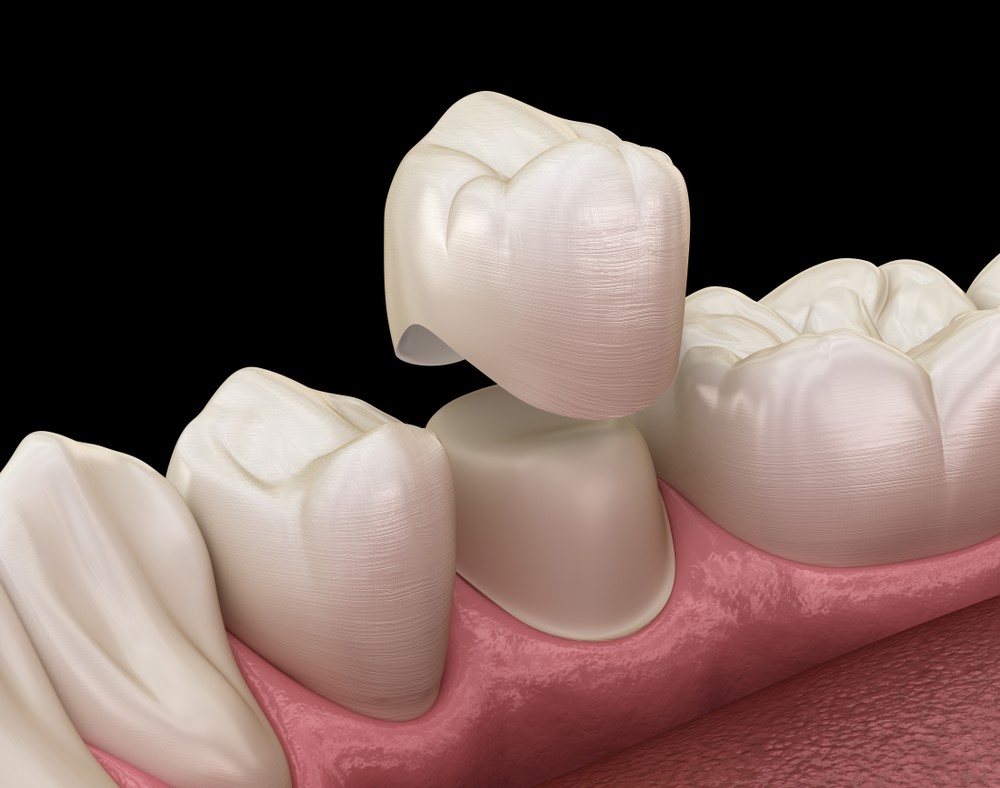
A crown, sometimes called a cap, is an excellent restoration for a tooth that has been weakened or damaged. If a tooth has decayed until roughly half of the tooth structure is missing, it may need a crown. This is not a hard rule, though – which part of the tooth has been damaged by decay is pertinent. Sometimes a filling can work well even when a large portion of tooth structure is missing.
The soundness of the cusps of a tooth is important in a decision of crown vs. filling. If a cusp is completely broken or missing from a molar or premolar, a dental crown is almost always the correct treatment plan.
The position of the tooth is also important. Front tooth crowns are treatment-planned more sparingly by many dentists, because filling material can suffice for many damaged front teeth. Also, for a front tooth that has been severely damaged, a crown preparation will remove some of the only remaining structure, leaving very little of the natural tooth. Enamel and natural tooth structure are precious and should be preserved whenever possible.
Root canals weaken teeth, so a common treatment plan for a tooth mostly destroyed by decay is a root canal and crown. For any back tooth that has decay into the nerve, it is the right plan in all but very rare cases.
What a Tooth Crown Does for Your Tooth
Crowns give the teeth they are on a new strength and higher level of protection – a suit of armor, if you will. Teeth that get dental crowns are less likely to decay, less likely to crack or chip, and more likely to stay in function long-term. Dental crowns protect teeth from catastrophic failure.
When a patient is experiencing cracked tooth syndrome, a crown can hold the cracked pieces of a tooth together like rings around a barrel, preventing the cracked tooth from cracking further and causing pain when chewing forces are applied.
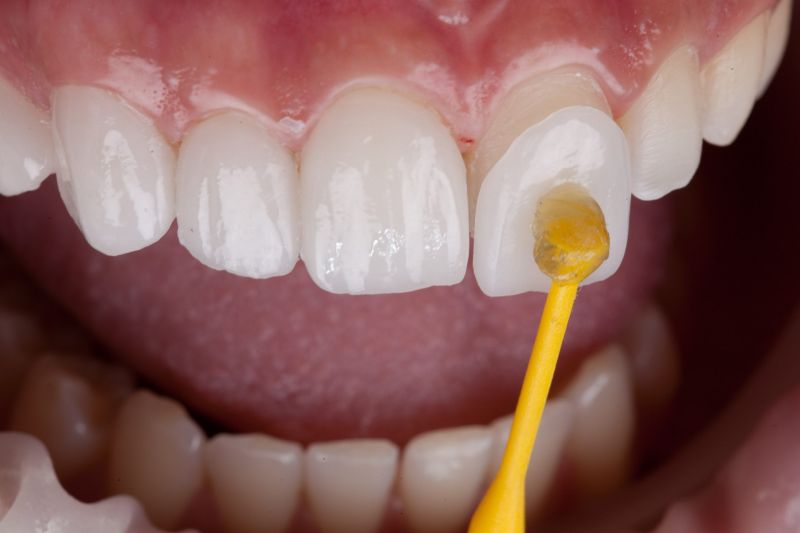
A front tooth crown or other dental crown can also restore the natural form and appearance of a tooth that has been damaged by decay, necrosis, breakage, or wear. Porcelain crowns can be beautiful and look quite natural when made by a skilled technician.
Signs You Might Need a Crown
- A large part of the tooth is missing due to breakage or decay
- Pain when chewing, especially hard foods
- Failed fillings that are large or deep
- Teeth worn down from acid erosion or grinding
- A tooth that is making a smile look atypical or non-ideal
- A back tooth that has had a root canal
What Tooth Crowns Are Made Of
In the last 20 years, most dentists have moved to using all porcelain crowns.
- Porcelain Crowns – made from zirconia, lithium disilicate, or feldspathic porcelain, all porcelain crowns offer a high level of esthetics without the issues of porcelain-fused-to-metal crowns (PFMs)
- Porcelain-fused-to-metal (PFM) Crowns – popular in the past, but mostly used now for bridgework, PFMs have a metal coping that fits over the tooth with layers of porcelain stacked on top of it – problems include seeing a black line at the gumline and chipping porcelain
- Gold crowns – while gold is an excellent restorative material, it is used less often now than in the past due to its high cost and color
What to Expect During Your Crown Appointment
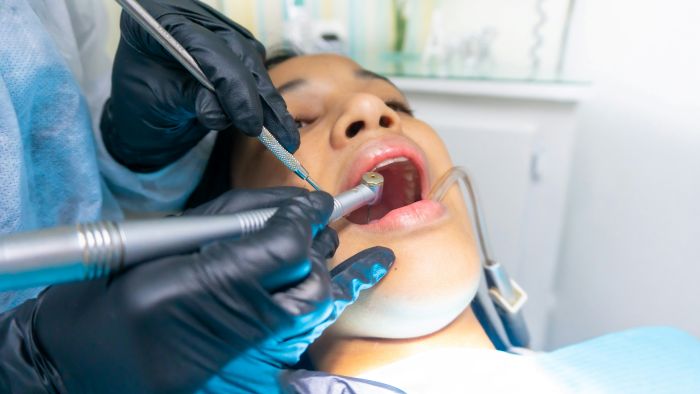
At your crown procedure, you will get numb, then your tooth will be prepared for a crown. It is normal to feel some pressure and vibration during the procedure, but not pain. When your tooth is ready, we will take a digital scan of your tooth.
For most back teeth and some front teeth, we will make your crown at the office, and you will leave with the final crown. For other front teeth, or if we are making crowns for 4+ front teeth, we will often be sending your scan to a lab so they can make your crowns. When this is the case, you will leave the office with temporary crowns that will cover your teeth until you return to have the final crowns cemented on.
Keeping Your Crown Healthy for Years to Come
Brushing, flossing, and avoiding excessive consumption of sugary food and beverages are the recipe for keeping your crown for years to come. If you think you might need a crown, give us a call!
FAQ
Q: How much are tooth crowns?
A: It depends – some teeth need a buildup or a post and core along with the crown, while others need a root canal, and some only need the crown itself! Some will need smile design services. The best way to find out is to come in for a limited or comprehensive exam!
Q: How long do tooth crowns last?
A: If well taken care of, they can last for decades!
Q: Why did my dentist recommend a crown instead of a filling?
A: It’s hard to say without seeing the tooth, but it’s most likely because it’s less likely to fail and more likely to last a long time with a more extensive restoration!
Q: What happens if my crown comes off or breaks?
A: A well-designed and well-made crown should not come off or break, assuming there is not new decay on the tooth underneath. If that happens, go see your dentist, and he/she will most likely stand behind the work and make things right!
Q: Will my front tooth crowns stain over time? Can I whiten those teeth?
A: Modern ceramic crowns are quite stain resistant, and any stains that do occur can usually be cleaned or polished off. This is rarely an issue. A tooth with a crown on it will remain the color of the crown – it cannot be effectively whitened.