
Although wisdom tooth removal can be scary to think about, it is a routine procedure that dentists do day in and day out.
Why Wisdom Teeth Often Need to Come Out
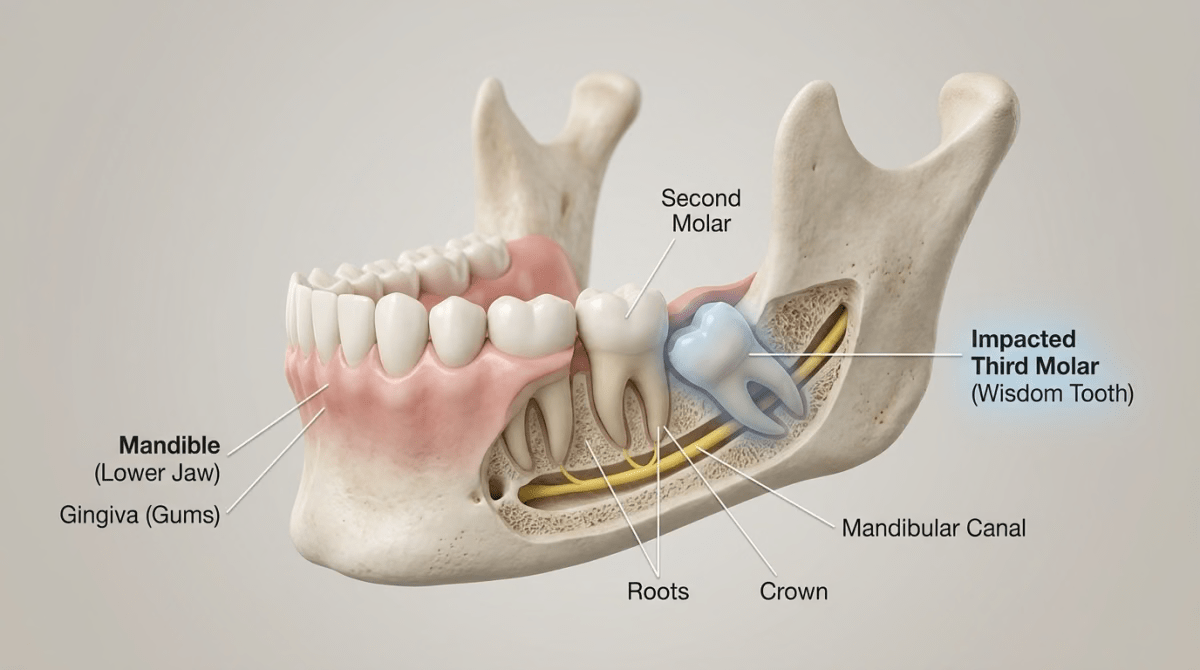
Wisdom teeth often need to come out for a couple of reasons. The first is that with modern diets, our jaws often don’t grow large enough to accommodate full eruption of the wisdom teeth into the mouth. When this is the case, the teeth are often partially erupted, partially impacted (in the bone or soft tissue), or fully impacted. A tooth that is not fully erupted is often impossible to keep clean. This leads to decay, gum disease, and inflammation around the tooth.
Even when wisdom teeth have space to fully erupt, they are often difficult to impossible to keep clean. They are difficult to reach with a brush or floss. For the same reason you may have trouble cleaning them at home – poor access – a dentist will often have trouble repairing them if they do end up with issues.
Sometimes, due to lack of ample space, a wisdom tooth can grow into the roots of the adjacent tooth – the second molar – causing resorption and possible loss of that tooth.
Signs Your Wisdom Teeth May Need Attention
- Pain or tenderness
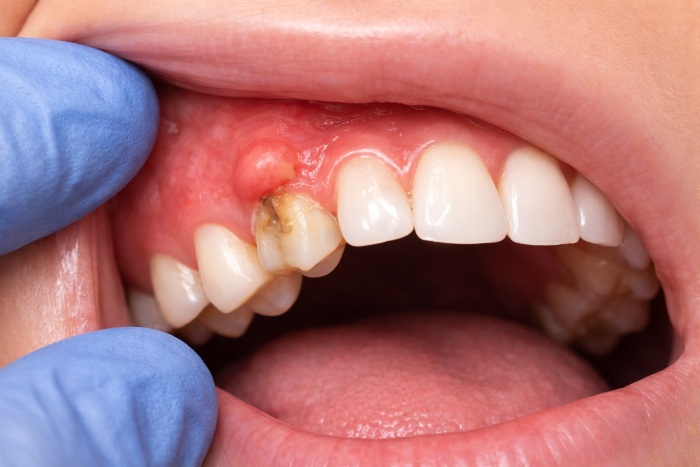
- Swelling, redness, or pus
- Difficulty opening fully
What Happens During the Procedure
Wisdom tooth extraction is just like other dental extractions. X-ray images, sometimes including CBCT (3D) images, are taken to see the positions of the teeth with respect to other anatomical structures. Depending on case difficulty and recommended level of sedation, medicine will often be given to make you more comfortable during the procedure.
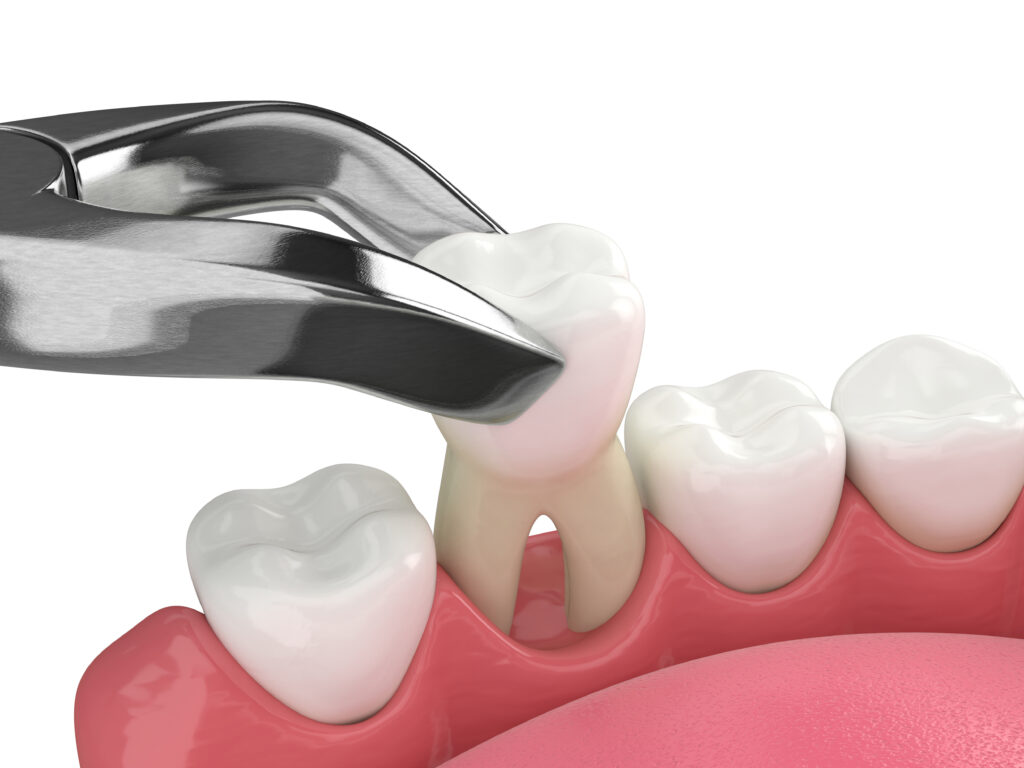
Sometimes, the dentist or surgeon will put direct pressure on the tooth until he gets movement, then he will remove the tooth from the mouth. Other times, an incision will be made and the gums will be moved out of the way to gain access to the area. Some bone will be removed to facilitate the removal of the tooth, and pressure will be put on the tooth until it can be removed. In many cases, the tooth will be cut or broken into multiple pieces to make removal easier and safer.
During the procedure, feeling pressure in the mouth is normal. Hearing sounds is also normal – cracking, popping, and the whistling of the handpiece are typical sounds. You should never feel any pain during the procedure. If you do, the dentist should have a signal for you to give so that he can stop and give you more numbing medicine before he continues.
Recovery Week by Week
Wisdom teeth removal surgery does not usually require weeks of recovery – with respect to symptoms, anyway. Wisdom teeth removal swelling usually peaks at around 48 hours, and things will get better from there. Wisdom teeth removal pain usually peaks at around 48 hours as well, and after waking up on the 3rd day, you should be the same or better each day until everything feels normal again. After 3-4 days, most patients are back to their normal life with minimal to no discomfort.
While this is generally true, a small percentage of patients will have a harder time with recovery, and they will feel soreness for a week or two until things settle down. Removal of impacted wisdom teeth is slightly more likely to result in a longer healing period than removal of erupted teeth. An important thing to remember is that wisdom tooth removal is an invasive surgical procedure in your head. Being sore afterwards is expected! Often, patients that feel distress during the recovery period are those that expect to be back to 100% when they wake up the next morning. The body needs time to heal and recover!
Making Recovery Easier
Wisdom teeth removal recovery is fairly simple. Ice can be used to reduce swelling, although it may not speed recovery time or affect healing in a significant way. Avoid smoking, spitting, and suction in the mouth for 72 hours to prevent dry socket. Eat soft foods for the first 24 hours, then eat harder foods as you can tolerate them. Keep the extraction site clean for the first few days – the dentist or surgeon may send you home with a syringe to help with that. Be sure to rinse gently. In the same way, if you do swish warm saltwater, be sure to do so passively and with little to no pressure in the mouth. Pressure can slow down the healing process! If anything feels off, or if you have any questions, call your dentist or surgeon.
FAQ
Q: What can I eat after wisdom teeth removal?
A: It’s best to stick to soft foods for the first 24 hours – soup, jello, mashed potatoes, or anything that doesn’t require chewing. After that, you can eat harder foods as you can tolerate them.
Q: How long does wisdom teeth removal take?
A: The appointment to get 4 wisdom teeth removed can take around 2 hours, but the surgery itself is typically completed in one hour or less.
Q: Do all wisdom teeth need to be removed?
A: No! Some patients have wisdom teeth that have fully erupted into the mouth, are in function, and are well maintained. These do not need to be removed. Other patients have teeth that never erupted at all and are unlikely to cause problems. Some have a wisdom tooth that is in an anatomical position that puts them at great risk of nerve damage if the tooth is removed. In these cases, wisdom tooth removal is not always recommended. If you’re not sure, the best way to know is to see your dentist for an exam!
Q: How much does wisdom teeth removal cost?
A: The cost of removal depends on a number of factors – number of teeth, level of impaction, level of difficulty, level of sedation, and location. The best way to find out is to go see your dentist!
Q: What are dry socket symptoms?
A: Dry socket symptoms include a foul odor and radiating pain through the jaw starting about 3-4 days after your extractions.
Q: What should I do if I think I have dry socket?
A: If you think you might have a dry socket, go see the dentist or surgeon that removed your teeth and have them take a look! A dry socket will heal on its own if nothing is done, but if you are able to see your dentist, he will have something he can pack into the extraction site that will relieve your symptoms.